Activities
[Review] 《Funkchestra》 Review
2005
Ban E-Jung | Art Critic
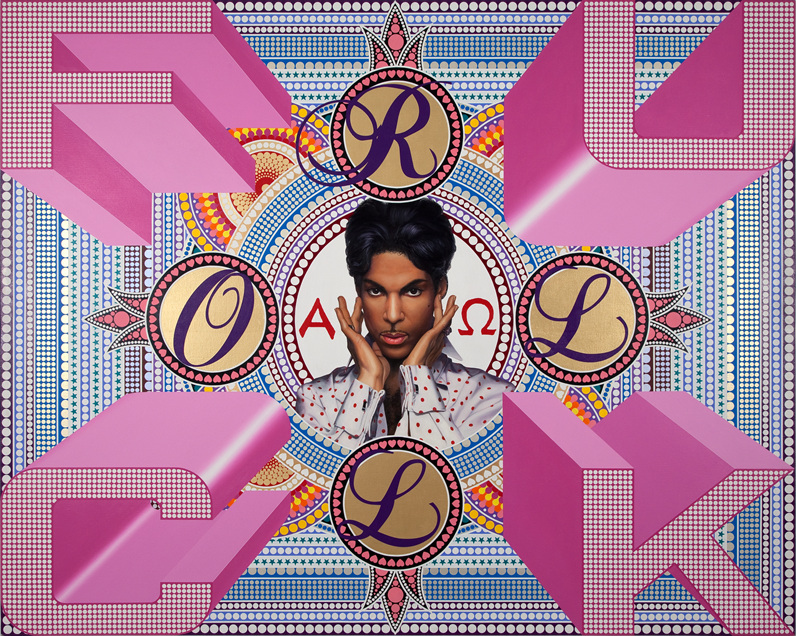
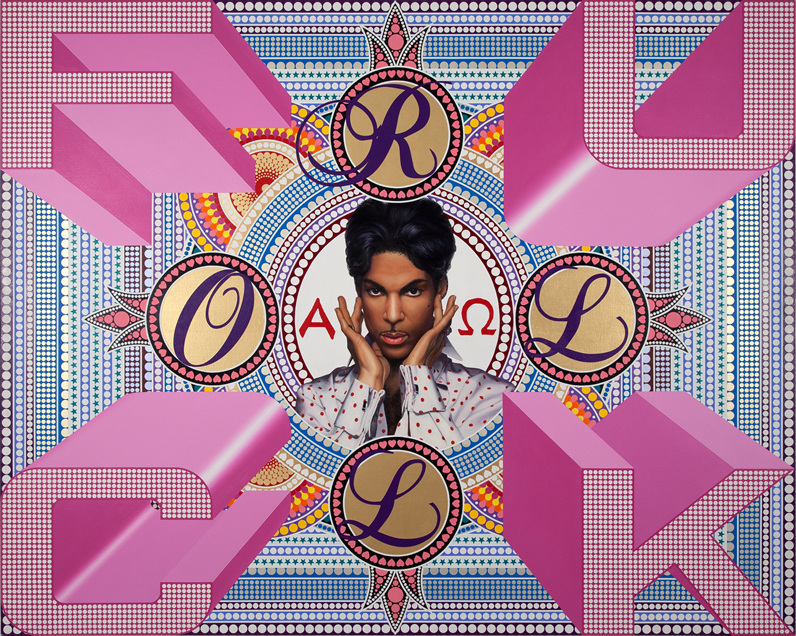
Hong Kyoungtack, Fuck&Roll, 2008 © Hong Kyoungtack
I knew that he titled his first solo exhibition “Shrine,” but I only learned this time that he is a devout “child of the Lord.” This was not apparent from the meticulously arranged, eventful new works in the exhibition, but rather something I learned by chance after asking him an unrelated question. Does this fact carry weight in this text? It may always be important from the artist’s private perspective, but from the public standpoint of viewers, it holds little significance. This interpretation may betray his wish—expressed in a 2000 artist note—that viewers might be “somewhat indoctrinated” by his world, but such is the case.
Paradoxically, this is precisely why his deeply religious paintings can be interpreted from a secular standpoint, thereby gaining broader grounds for appreciation and evaluation. If contemporary religious painting merely imitates past traditions without reflection, it risks becoming a pale vehicle for belief. However, Hong Kyoungtack’s “religious” paintings of 2005 succeed in communication and dissemination because they internalize the present. This is possible because the absolute he believes in does not insist on dominance within his work, being counterbalanced by another of his interests.
Funky Confession
Another aspect I had not known about him is worth mentioning. As suggested by the exhibition title 《Funkchestra》—a combination of funk music and orchestra—many works incorporate the faces and terminology of musicians he admires. Indeed, he loves funk music. Musicians such as Kate Bush and Prince are important enough to appear directly on his canvases. The influence manifests in the transformation of vibrant musical tones into primary-colored pigments within meticulously constructed compositions.
One of the consistent traits connecting his ‘pen’ and ‘bookshelf’ series with these works is his mastery of color combinations. Funky sound codes are translated into vivid color structures, where figures such as Christ appear alongside Kate Bush or Prince with equal emphasis. Thus, the most decadent pop icon and the most solemn religious figure coexist within the same visual grid. The result is, in essence, a secularized sacred painting within a messy world.
From Postmodern Bookshelf Painting to Equalized Sacred-Profane Imagery
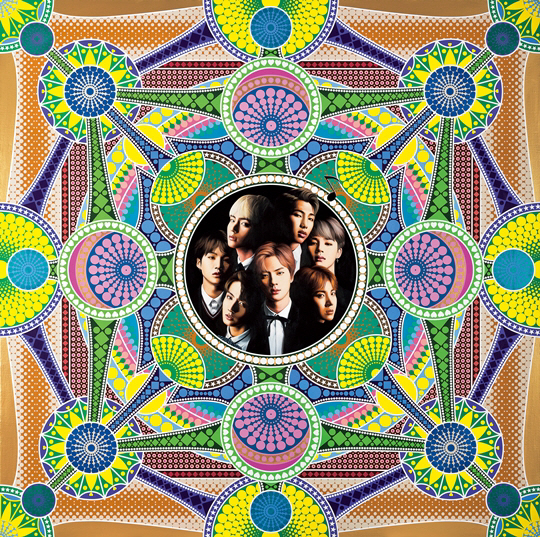
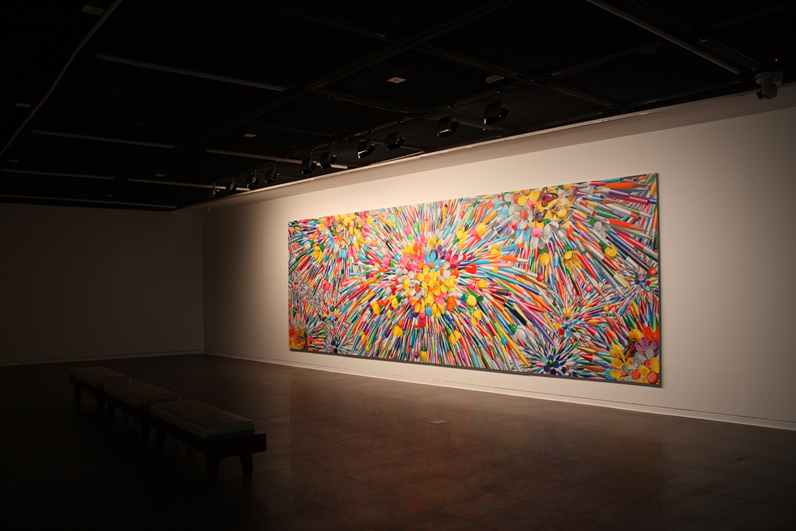
The new works adopt a consistent visual format: the canvas is divided into four rigid sections, with a central figure surrounded by diagonally radiating patterns in crude primary colors. While reproductions in print may seem confusing, the original works, often large-scale and labor-intensive, defy such impressions. Though no actual music is present, the works feel deeply “funky,” and although they do not narrate religious stories, they evoke a sense of reverence. Reducing them simply to the “ongoing possibilities of painting” feels insufficient.
Despite having little affinity for religion or funk music myself, I found myself expressing awe at the opening. In a secularized world, the survival of the divine requires aligning itself with the level of the secular. Hong Kyoungtack’s works demonstrate this coexistence. Religious icons such as the Pope or Christ cannot claim exclusive authority within the canvas; instead, they share equal status with secular symbols. The Pope and Christ appear alongside words such as P! O! P! E! or I! N! R! I!, while secular desires are expressed through F! U! C! K! or L! O! O! K!. This equalization of sacred and profane elements constitutes the aesthetic consistency of his work.
* New Power Generation (NPG) refers to Prince’s musical collective, here used metaphorically to indicate Hong Kyoungtack’s generation.
Source | Hong Kyoungtack: The Sacred Quadrinity of New Power Generation | Ban E-Jung
* This text was originally written for the November issue. It was initially intended to be paired with another exhibition review but was ultimately published as a standalone piece.
References
Activities